
Substance Use IOP & outpatient addiction treatment in Sioux Falls, SD
MWI Health's Substance Use IOP in Downtown Sioux Falls provides structured, compassionate outpatient addiction treatment for adults with alcohol and drug use disorders. Evidence-based sessions meet three days per week, in person or virtually throughout South Dakota.
Whether you are looking for outpatient rehab or addiction treatment near you, our team can usually get you started within days of your first call.
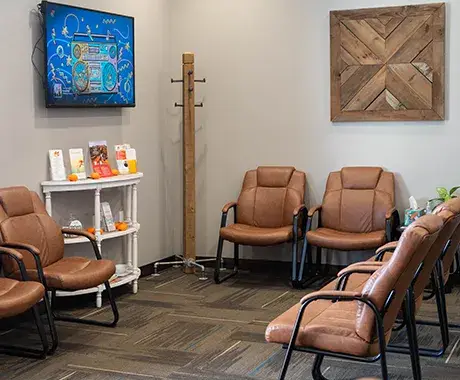
Substance Use IOP
Outpatient addiction treatment that fits your life
MWI Health's Substance Use IOP in Downtown Sioux Falls provides structured, evidence-based outpatient addiction treatment for adults managing alcohol, opioid, stimulant, and other substance use disorders. It is built for people who need more than weekly counseling but do not require a residential stay, so you can keep living at home and meeting your responsibilities while getting intensive clinical support.
Sessions meet three days per week, about three hours each, and include group therapy, individual counseling, relapse prevention, and psychiatric support led by licensed addiction clinicians. Medication-assisted treatment is coordinated with prescribing providers when clinically appropriate.
The program works as a step down from inpatient, residential, or partial hospitalization care, or as a step up when standard outpatient counseling is not enough. Before enrollment, our clinical team completes a thorough assessment to confirm the right level of care.
Begin your intake
Start your confidential intake
Confidential and no obligation. Our team reaches out the same day to verify your benefits and answer your questions.

Your care team
Randie Abbas
Licensed Addiction Counselor
As a Licensed Addiction Counselor, Randie leads much of the day-to-day work in our Substance Use IOP, guiding group and individual counseling and relapse prevention and helping build the skills that make recovery hold.
Meet Randie AbbasIs this right for you
Is outpatient addiction treatment right for you?
Outpatient addiction treatment is not entry-level counseling, and it is not residential rehab. It sits in an important middle ground, structured enough to create real change and flexible enough to let you stay connected to your life, your family, and your work while you do the hard and meaningful work of recovery.
Our clinical team recommends this program for adults whose relationship with alcohol or substances has begun to affect their health, relationships, or daily functioning, and who need more support than weekly therapy alone. It is also a common step down from a higher level of care, letting you continue structured treatment as you transition back to daily life.
If you are not sure whether this level of care is right for you, our admissions team will do a confidential assessment. No pressure and no judgment, just an honest conversation about what would help you most.
Your use of alcohol or substances is affecting your work, relationships, health, or daily responsibilities
You have tried to cut back or stop on your own but found it hard to maintain without support
You are stepping down from inpatient, residential, or partial hospitalization care and need continued structured support
You are stable enough to live at home and do not require medically supervised detox or 24-hour care
You want to stay connected to work, family, and daily life while receiving structured addiction treatment
Treatment schedule
A time that fits around your life
Our IOP meets Monday, Wednesday, and Thursday from 9:00 AM to 12:00 PM, in person at our Downtown Sioux Falls clinic (317 North Main Avenue, Ste 100) or virtually for patients throughout South Dakota.
Downtown Sioux Falls
Attend structured sessions in person at our Downtown Sioux Falls clinic. Group therapy, individual counseling, and skills-based curriculum, three mornings per week, built to fit around afternoon work and family commitments.
Virtual IOP
Same schedule, same clinical team, same evidence-based curriculum, delivered to patients across South Dakota, from Sioux Falls and Rapid City to Aberdeen, Brookings, Watertown, Pierre, Mitchell, and Yankton, through secure, HIPAA-compliant video.
What each week looks like
What happens in each IOP session
Each week follows a consistent three-day structure designed to build awareness, emotional regulation, and real-world coping skills. Every session pairs a core curriculum block with an experiential component and a skills exercise.
Regulation & awareness
Understanding your triggers and building coping tools
You will focus on
- Managing overwhelming emotions without substances
- Identifying personal triggers for use
- Building practical coping skills
- Staying grounded under stress
What you will gain
- A clearer understanding of what drives your substance use and how to interrupt those patterns
- Proven skills to get through cravings and difficult moments without using
- A stronger connection between how your body feels and what your mind is going through
Example group topics
- Understanding your emotional patterns
- What happens in your body when you are overwhelmed
Insight & internal work
Understanding the roots of substance use and building self-knowledge
You will focus on
- Understanding your patterns and history
- Processing difficult experiences that drive use
- Making sense of relationship dynamics
- Finding your own voice in recovery
What you will gain
- A deeper understanding of how past experiences and trauma contribute to substance use
- The ability to start shifting the stories you tell yourself about who you are and what you deserve
- Insight into why certain people, places, or emotions trigger urges to use
Example group topics
- Parts of you that show up under stress
- Rewriting the story you tell yourself
Action & sustained change
Building a recovery plan that works beyond treatment
You will focus on
- Changing unhelpful thinking patterns
- Living by your values in recovery
- Relapse prevention and planning
- Building a life that supports long-term sobriety
What you will gain
- Skills to recognize and interrupt the thought patterns that lead back to use
- Clarity on what matters most to you and a plan for building a life that reflects it
- A personalized roadmap for staying well after IOP ends
Example group topics
- Getting back on track when things feel hard
- Building a life that aligns with your values
Monthly treatment calendar
A four-week rotating schedule
Our outpatient addiction treatment uses a monthly rotating calendar for variety, sustained engagement, and full exposure to core therapeutic approaches. Each four-week cycle covers all three session themes across a range of evidence-based methods.
Substances we treat
Alcohol and substance use disorders we treat
Addiction looks different for every person. Our outpatient addiction treatment addresses the full range of substance use disorders with individualized care plans that meet you where you are.
Alcohol Use Disorder
Evidence-based treatment for alcohol dependence and problematic drinking, including CBT, motivational interviewing, relapse prevention, and coordination of medication-assisted treatment with prescribing providers when clinically appropriate.
Opioid Use Disorder
Treatment for prescription opioid and heroin use disorders, with coordination of medication-assisted treatment including buprenorphine and naltrexone when clinically indicated. Relapse prevention, emotional regulation, and recovery skills run throughout.
Stimulant Use Disorder
Structured treatment for methamphetamine, cocaine, amphetamine, and other stimulant use disorders using behavioral therapies, contingency management, emotional regulation skills, and co-occurring mental health support.
Cannabis Use Disorder
Treatment for problematic cannabis use that affects daily functioning, mental health, motivation, and quality of life, including CBT, motivational interviewing, and skills for managing cravings and holding recovery goals.
Polysubstance Use
Comprehensive treatment for people using multiple substances, with an integrated approach that addresses every substance within a single plan and tailors care to the complex clinical picture that multiple substances create.
Co-occurring mental health & SUD
Integrated treatment for adults managing both a substance use disorder and a mental health condition such as depression, anxiety, PTSD, or a mood disorder. For the most integrated co-occurring care, see our Dual Diagnosis IOP.
How we treat
Evidence-based addiction treatment methods
Every method we use is supported by peer-reviewed clinical research and adapted to each person's substances, history, and recovery goals. Our licensed clinicians apply these across all three weekly sessions.
Cognitive Behavioral Therapy
CBT identifies and restructures the thoughts and behavioral cycles that drive substance use, so you learn to recognize high-risk situations, interrupt automatic responses to cravings, and build lasting change that supports recovery.
Dialectical Behavior Therapy
DBT builds the distress tolerance, emotional regulation, and interpersonal skills that matter most when substance use is tied to emotional dysregulation, trauma responses, or difficulty managing intense feelings without using.
Motivational Interviewing
Motivational interviewing helps you clarify your own reasons for change, work through ambivalence about recovery, and build internal commitment to sobriety. It is especially useful early in treatment and when motivations compete.
Relapse Prevention
A structured way to identify triggers, warning signs, and high-risk situations, then build a personalized plan for navigating each one without returning to use. You leave with a concrete plan tailored to your recovery.
Group Therapy
Peer-supported sessions that build accountability, connection, and shared learning among people at similar stages of recovery, led by licensed addiction clinicians and focused on the themes in the three-day curriculum.
Psychiatric support & MAT coordination
Integrated psychiatric support keeps mental health medications managed alongside addiction treatment. When clinically appropriate, our team coordinates medication-assisted treatment, including buprenorphine and naltrexone, with prescribing providers.
Levels of care
Flexible levels of care across our continuum
Recovery is not one-size-fits-all. We offer several outpatient levels of care matched to your needs, the severity of substance use, and where you are in recovery. Our clinical team determines the right fit during your assessment.
IOP 0.5: Early intervention & prevention
A foundational program focused on substance use education, awareness, and early coping strategies for people beginning to recognize problematic patterns or at risk of developing a substance use disorder.
Ideal for: early-stage concerns, motivation building, education, and intervention before dependence progresses.
IOP 1.0: Standard outpatient treatment
Structured outpatient care for ongoing recovery with flexible scheduling, providing evidence-based therapy and skill-building for people reintegrating into daily life while maintaining long-term sobriety.
Ideal for: sustained recovery support, relapse prevention, managing real-world triggers, and continuing care after a higher level of treatment.
IOP 2.1: Comprehensive treatment
Our most intensive outpatient option, meeting 9 to 20 hours per week across multiple group and individual sessions, with the clinical structure, supervision, and accountability that significant support requires.
Ideal for: moderate to severe substance use disorder, step-down from inpatient or residential treatment, and those needing structured accountability.
Admissions & intake
How to start treatment at MWI Health
From your first call to your first session, our team handles insurance verification, the clinical assessment, and scheduling, so you can focus on getting better. Most people begin within days of their first contact.
Contact us
Same dayCall (605) 800-7477 or submit the intake form. Our coordinator gathers basic information and answers your first questions.
Insurance verification
Within 24 hoursWe contact your insurance directly to verify IOP benefits and explain any out-of-pocket costs before you decide anything. We handle this for you.
Clinical assessment
1 to 2 daysA licensed clinician completes a confidential evaluation to confirm your diagnosis, the right level of care, and an individualized treatment plan.
Begin treatment
Within daysOnce your assessment is complete and insurance is confirmed, we schedule your first session, in person in Downtown Sioux Falls or virtually from anywhere in South Dakota.
Meet your clinical team and group members. Review program expectations, scheduling, and confidentiality.
Work with your therapist to set personalized recovery goals based on your assessment and clinical needs.
Begin group therapy and individual counseling as part of your structured weekly schedule.
When appropriate, meet a psychiatric provider for medication evaluation and management, including MAT coordination when indicated.
Good to know
Questions about outpatient addiction treatment
Our Substance Use IOP treats alcohol use disorder, opioid use disorder including prescription opioids and heroin, stimulant use disorder such as methamphetamine and cocaine, cannabis use disorder, and polysubstance use. We also provide integrated support when a mental health condition co-occurs with substance use.
Yes. When it is clinically appropriate, our team coordinates medication-assisted treatment, including buprenorphine and naltrexone, with prescribing providers, alongside the therapy and psychiatric support in the program.
You do not need to be completely abstinent to begin, but you should be medically stable and not in need of medically supervised detox at the time of enrollment. If detox is needed first, our team will help you arrange it before starting IOP.
We offer several outpatient levels of care, from early intervention (IOP 0.5) to standard outpatient treatment (IOP 1.0) to our most intensive option (IOP 2.1), which meets 9 to 20 hours per week. Your assessment determines the right level based on the severity of substance use and where you are in recovery.
Residential rehab means living at a treatment facility full time, while IOP lets you attend sessions during the day and return home. IOP offers intensive therapy and support while you keep up with work, family, and daily responsibilities.

Medically reviewed
Reviewed by Clay J. Pavlis, MD
Board-certified psychiatrist and Chief Medical Officer of MWI Health.
Explore our programs
Related programs at MWI Health
Explore our related programs, or get in touch with our admissions team to find the right fit.
In crisis? Get help now
This page is not for emergencies. If you or someone you know is in immediate danger, use one of these resources right away.
You don't have to figure this out alone
Our admissions team is here Monday through Friday, 8:00 AM to 5:00 PM, to listen, answer your questions, verify your insurance, and help you take the next step. No pressure, no judgment.
Not for emergencies. If you are in immediate danger, call 911 or call or text 988 for crisis support, available 24/7.